

Here at Muzeum we see a lot of gold. People bring us their unwanted jewelry, coins, watches, and other gold items every day. As professional gold and silver buyers, we pride ourselves on transparency and helping our customers understand exactly what they have before they sell.
When you’re looking to turn your gold into profits, knowing what you own is essential. One of the most common questions we hear is: how can you tell the difference between solid gold and gold plated items?
The answer can have a major impact on value, so let’s break it down. If you're curious about silver you can check out our previous blog.
At first glance, gold items can look nearly identical. A gold plated chain may shine just as brightly as a solid gold one but the value difference is significant.
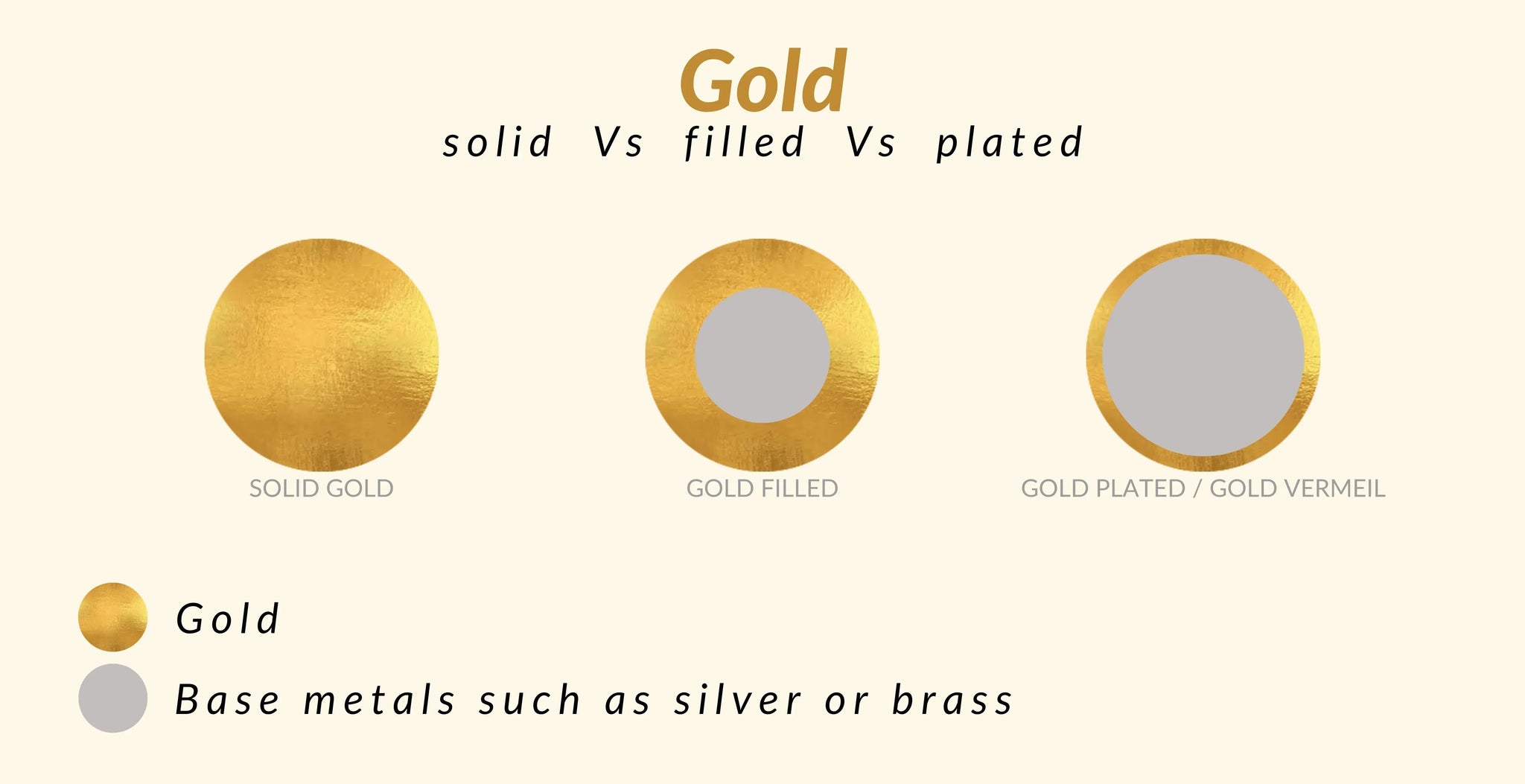
Solid gold refers to items made primarily of gold, often alloyed with other metals for strength. Purity is measured in karats:
These alloys improve durability since pure gold is naturally soft.
Gold plated items, on the other hand, are made from a base metal—such as brass, copper, or stainless steel—with a thin layer of gold applied on the surface. This layer is often extremely thin, meaning the actual gold content is minimal.
While gold plating gives the appearance of solid gold, it does not carry the same resale value.
Gold filled is sometimes confused with gold plating, but it’s a different category.
Gold filled items have a much thicker layer of gold mechanically bonded to a base metal. Typically, they contain about 5% gold by weight. While more valuable than plated items, they still don’t compare to solid gold in resale value.
Before bringing your items in, there are a few ways to get a better idea of what you have.
The easiest way to identify gold is by checking for a hallmark.
Solid gold items typically include markings such as:
These numbers indicate gold purity.
Gold plated items may include markings like:
If you see any of these, the item is not solid gold.
Keep in mind: not all items are stamped, especially older or worn pieces.
Gold is not magnetic. If a strong magnet pulls your item, it likely contains little to no gold.
However, this test is not definitive. Many base metals used in jewelry are also non-magnetic, so a lack of magnetism doesn’t guarantee the item is solid gold.
Gold plated items tend to show wear over time.
Look for:
Solid gold does not tarnish or flake. If the color is consistent throughout—even in worn areas—it’s more likely to be genuine.
Gold is a dense, heavy metal. Solid gold items often feel heavier than they look.
Gold plated items, especially those made from lighter base metals, may feel noticeably lighter.
While this isn’t a precise test, it can be a useful clue when comparing similar items.
The most accurate way to determine gold content is to have it professionally evaluated.
At Muzeum, we test gold using XRF technology, which allows us to determine the exact metal composition without damaging your item. We then weigh it in front of you and calculate your payout transparently.
Our evaluations are always free, and there’s no obligation to sell.
You may come across gold testing kits online that use acid to determine purity.
While these tests can work, they require scratching or applying acid directly to the item, which can damage it—especially if it’s vintage or collectible.
There are safer, non-destructive methods available, so it’s best to avoid risking the value of your piece. In our store we use an x-ray machine to get an accurate reading!
Over time, it’s easy to lose track of what’s real gold and what isn’t. Here are a few common items and how to assess them.
Most real gold jewelry will have a small stamp indicating its purity. Check clasps, inner bands of rings, and the backs of pendants.
If you don’t see a stamp, it doesn’t automatically mean it’s fake but it’s worth having it checked.
If you have a gold pocket watch or wristwatch, it’s important to take a closer look at the markings before assuming it’s solid gold.
Many pocket watches are described as “gold” based on their appearance, but in reality, they may be gold plated or gold filled rather than solid gold.
One marking that often causes confusion is wording like:
10k 14k 18k in combination with:
Despite how it sounds, this does not refer to a guarantee or the purity of the gold. Instead, it indicates that the watch is gold filled, meaning a layer of gold has been bonded to a base metal. The number of years refers to how long the gold layer was expected to last under normal wear—not the gold content itself.
Another important detail is that these markings typically apply only to the outer case, not the internal movement. The inside of the watch is usually made from other metals such as steel or brass.
Because of this, pocket watches can be especially misleading. Two watches that look nearly identical may have completely different values depending on whether the case is solid gold or gold filled.
Gold bullion coins and bars are typically made from high-purity gold (often 24K or close to it).
These items are usually stamped with their weight and purity and are valued primarily based on gold content. If you're interested in selling bullion we are very competitive buyers of gold and silver, and we also sell through a sister company.
When evaluating gold, we focus on two main factors:
These determine the base value of the item.
Gold plated items generally have little to no resale value for their metal content, as the gold layer is extremely thin.
However, certain items—such as designer jewelry or collectible pieces—may still carry value beyond the metal itself.
Understanding the difference between solid gold and gold plated items can help you set realistic expectations before selling.
If you’re unsure about what you have, the easiest and safest option is to have it evaluated by professionals you trust.
At Muzeum, we make the process simple, transparent, and pressure-free—so you can feel confident every step of the way.
If you have any questions at all feel free to give us a call - 1(800)746-0902
Comments will be approved before showing up.